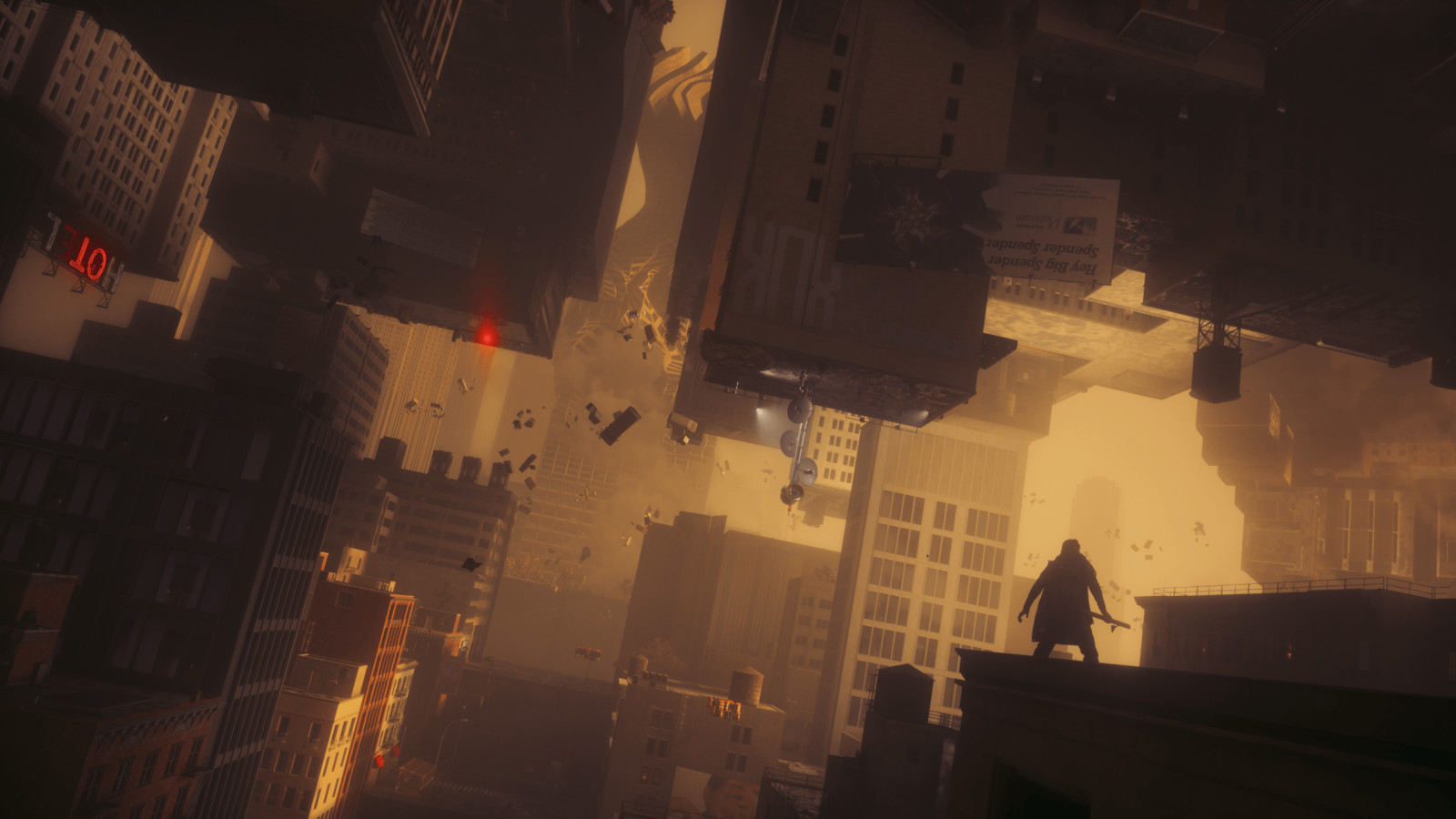
Control Resonant expands Remedy Entertainment’s paranormal setting into Manhattan, but the scale is not the main design story. The studio built its version of New York around contrast: recognizable streets establish a baseline, then altered physics and reactive scenery make each break from reality more legible.
A city designed to react
Art director Elmeri Raitanen told PlayStation Blog that the sequel retains the destruction and environmental reactions used in Control. Ground slams and shockwaves can disturb leaves, trigger fire hydrants and scatter litter. Those details connect Dylan Faden’s abilities to the space around him rather than treating the city as a static backdrop.
Remedy calls the setting “Strange York.” It is not a one-to-one reconstruction of New York. Familiar but dated elements, including phone booths, support a movie-like version of the city. The Central, described as the most ordinary zone, sits near the middle of the world so that its everyday surroundings can sharpen the impact of the stranger areas.
Gravity sets the rules underground
The Gap uses bare concrete and an unreal space to reflect Dylan’s history of confinement and experimentation. The Sinkhole takes a different approach. Its apartment building bends combat across floors, walls and ceilings. Lead level designer Anne-Marie Grönroos said the area began as a prototype influenced by deep-sea exploration, cave diving and underground transit spaces.
A simple rule changed how the mission worked: any surface that appears walkable should be walkable. Once gravity shifting was applied to that rule, rooms could support encounters and traversal from several orientations. The distortion changes play because the geometry becomes part of how the player reads and crosses the space.
Bosses are built around a test
Lead gameplay designer Sergey Mohov described the bosses as skill checks. Remedy collected concepts from across the team, selected ideas that matched a specific player experience, and prototyped each creature before fixing the required arena size and behavior. Concept artists and writers then connected the encounter to its zone and theme.
Some Resonant bosses draw on mycelium or hive-mind control, while medieval and church imagery supplies a sense of scale and authority. On PS5, the wider spaces support longer draw distances, more physics objects and more enemies. DualSense features provide a separate layer of feedback through radio calls on the controller speaker and resistance from the adaptive triggers. Together, those systems show how Control Resonant links world building to play: scenery reacts, surfaces redefine movement, and encounter art signals what kind of challenge lies ahead.
Sources
- Reporting source: GamerHeadlines
- Primary source: PlayStation Blog — Remedy Entertainment developer interview