Final Fantasy Resonance arrives on October 22, 2026, as the first HD-2D entry in the series: a rebuilt, console-scale take on the opening story arc of the mobile title Final Fantasy Brave Exvius. Its signature mechanic is the Vision, a set of 26 heroes pulled from 16 numbered Final Fantasy games that you find, equip, and level up. Understanding how Visions differ from the summons they superficially resemble is the difference between stumbling through Lapis and actually planning a party.
What a Vision actually is
Visions are not standard summons. Each one waits at a crystal shrine you encounter while exploring. Approaching a shrine plays a short story about that hero, shows video clips, and asks multiple-choice questions before the Vision joins you. The roster spans series history: Sephiroth (Final Fantasy VII), Terra (Final Fantasy VI), the first Warrior of Light, Lightning (Final Fantasy XIII), Noctis (Final Fantasy XV), Zidane (Final Fantasy IX), and Cloud, plus original Brave Exvius characters such as Black Mage Tronn. Once acquired, a Vision is equipped to one of your main party members, where it acts less like a one-off attack and more like a second job.
What equipping one changes
Attaching a Vision grants two things at once: a permanent baseline boost to stats such as health and speed, and a set of active magic and physical strikes. Noctis, for example, opens with a 20 percent attack increase and access to Thunder and Blizzard. Each Vision then earns mastery points from winning battles, which unlock further bonuses and abilities unique to that hero. Noctis’s early mastery grants a 40 percent gain to the equipped character’s limit burst gauge every time that character defeats an enemy, while Zidane’s path unlocks Steal and later Mug, which adds potential damage to the theft. The limit burst gauge is the meter that fills over a fight and powers a single heavy strike, so a Vision can accelerate that engine directly.
Visions versus Espers
Final Fantasy Resonance keeps traditional summons in the form of Espers, and the split matters. An Esper drops into a battle for a set number of turns and then leaves. A Vision stays equipped and changes how a character plays for as long as it remains slotted. The more a party member uses a given Vision, the more affinity they build with it, which in turn produces additional bonuses. The same character can hold a damage-oriented Vision or a support-oriented one, and because the stat gains are permanent, the choice shapes survivability as much as it shapes active skills.
The Resonance payoff
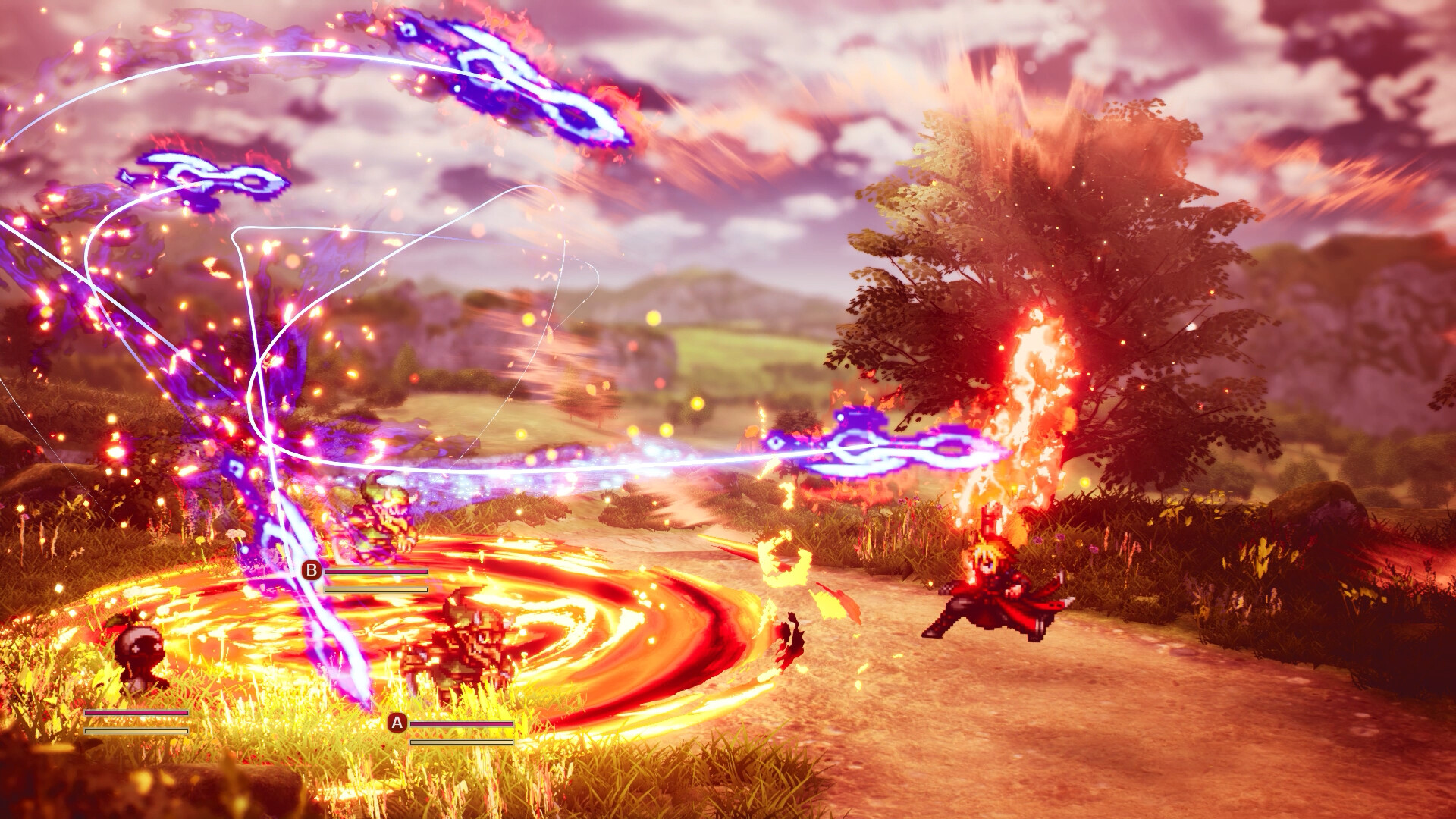
The system’s biggest reward is triggered through staggering. Find each enemy’s weakness and deplete its stagger meter, and once every opponent is staggered you can spend one equipped Vision’s cinematic finisher, with Cloud’s Ascension Resonance as the showcase example. The combat reads as a loop of setup and payoff rather than pure attrition, and the finisher is the reason to pay attention to enemy weaknesses instead of simply trading hits.
Roles decide the pairing
Each Vision excels in a specific job role, and the role system steers how a character approaches a fight. Breakers stagger enemies, Saboteurs disrupt and debuff, Commandos deal damage, and Medics heal. Lasswell is a Breaker: pair him with the Medic Vision Leah and he gains healing magic plus the option to pass his turn to an ally, turning him into durable back-up support. Pair the same Lasswell with Cloud, also a Breaker, and his offense strengthens instead. Lid joins with a Commando damage kit; team her with Zidane, whose Saboteur skills disrupt enemies, and she pressures both damage and status. Swapping the equipped Vision is how a character evolves between encounters, so a single run can push the same character through several different roles.
Outside combat, progression does not depend on grinding alone. Collecting magicite and visiting the Moogle of Light raises a Vision’s base rank and unlocks more abilities, offering a second route to the same growth.
What is still unannounced
Square Enix’s materials and the PlayStation Blog hands-on do not disclose the complete list of all 26 Visions, the exact number of roles or jobs, the total mastery levels per Vision, or whether the game behaves identically on every platform. The sources also do not confirm whether any Visions are paid or tied to post-launch content. Until launch, treat those specifics as open questions rather than settled features.
Final Fantasy Resonance launches October 22, 2026, on PC, PlayStation 5, Nintendo Switch, Nintendo Switch 2, and Xbox Series X|S at $49.99.