Steam Early Access lets a developer sell a game while it is still being built, and it turns the buyer into something closer to an early tester than a traditional customer. Valve’s developer documentation defines the program as a way to “sell your game on Steam while it is still being developed,” while giving customers clear context that the product “should be considered ‘unfinished.’” The program is meant for games that are already in a playable alpha or beta state, that are worth the price of the current build, and that have a developer committed to reaching a full release.
The most important fact for any buyer is this: an Early Access purchase is a full purchase of a playable game, not a reservation for a future one. Valve’s consumer FAQ says it directly — “Early Access is a full purchase of a playable game. By purchasing, you gain immediate access to download and play the game in its current form and as it evolves. You keep access to the game, even if the game later moves from Early Access into fully released.” You are buying the build that exists today, with the expectation that it will change. Every sensible decision about Early Access flows from that point.
What Early Access is not
Valve’s documentation lists three things Early Access is not, and each one answers a real question buyers ask.
The first is that Early Access is not a pre-order. A pre-purchase delivers a game on a future date; an Early Access title “must deliver a playable game or usable software to the customer at the time of purchase.” If you can download and play something the day you pay, you are not pre-ordering it.
The second is that Early Access is not crowdfunding. Valve’s rules tell developers they “should not use Early Access solely to fund development,” and to think through what happens if sales do not cover the cost of finishing the game. A purchase is not an investment, and Steam offers no guarantee that your money leads to a finished product.
The third, and the source of the most confusion, is that Steam Early Access is not the same as “Advance Access.” The phrase “early access” has become a generic industry term, and on other storefronts it usually describes a pre-order perk. On Steam, Advance Access is a pre-purchase incentive where a Deluxe edition lets a buyer play a finished game a few days before the standard edition unlocks. Steam Early Access is a different thing entirely: a product state in which the game is unfinished and openly sold as such. Conflating the two leads buyers to expect a nearly final game from a program that explicitly promises the opposite.
Why developers choose Early Access
The model exists because building a game with players watching can produce a better game. Valve’s FAQ frames Early Access as a way to “ship early, involve customers, and build lasting relationships that help everyone make better games,” and lists the developer-side benefits as connecting with a community early, collecting feedback and bug reports, and shipping updates as often as the team wants. For a developer, Early Access is a feedback engine as much as a sales channel, and the store page becomes the place where announcements, updates, and community discussion live side by side.
That feedback loop is also what makes the purchase different from a finished game. When you buy into Early Access, you are implicitly agreeing to play something that will change in response to what players say. Features may be reworked, balance may swing, and progress may be reset if the developer changes a system underneath you. Valve’s rules require developers to warn players up front when an update will break save files, but the broader reality is that change, not stability, is the norm during Early Access.
The questionnaire every Early Access game must answer
Every game that enters Steam Early Access must publish an Early Access questionnaire on its store page. Valve’s developer guide spells out the questions, and they double as a checklist for buyers because they are the developer’s own written commitments.
The questionnaire asks why the game is in Early Access and what the developer’s goals are; roughly how long the game will stay in Early Access; how the planned full version will differ from the current build; what the current state of the game is in terms of modes, features, and levels; and whether the price will change during or after Early Access.
Valve’s guidance to developers on how to answer is revealing. Developers are told to be specific, to explain themselves when they have no target date, and to keep the “current state” answer updated as the build evolves. On pricing, Valve imposes no rule: “many successful developers have raised the price, and many have ultimately lowered the price.” A lower Early Access price is a developer’s choice, not a Steam requirement.
The rules Valve places on developers
Early Access is not an unregulated corner of Steam. Valve publishes a set of rules, and several exist specifically to protect buyers from being sold a promise.
The most consequential rule for buyers is that developers must not make specific promises about the future. The rule reads that a developer cannot know when the game will be finished, or even whether it will be finished, and must not “ask your customers to bet on the future of your game.” Buyers are expected to purchase based on the game’s current state, never on a roadmap.
Other rules require the game to be genuinely playable when it launches in Early Access — a tech demo is not enough, and at minimum there must be a gameplay trailer — and forbid launching in Early Access when development is effectively finished and the developer only wants final bug testing. Developers must also not charge more on Steam than they charge elsewhere, and must be transparent about known problems, including whether future updates will break save files.
Refunds for Early Access purchases
Steam’s standard refund offer covers most purchases within fourteen days of purchase and with less than two hours of playtime. The refund page states the Early Access-specific detail plainly: if you buy a game that is in Early Access, “any playtime will count against the two-hour refund limit.”
The practical consequence matters more for Early Access than for a finished game. A buyer might reasonably want to reserve judgment on an unfinished game until a later update lands. Steam’s policy does not allow that: the hours you play today count, whether or not the build improves next month. If you are unsure the current build is worth the price, the sensible move is to test carefully inside the two-hour window or to wait, rather than assume you can refund later once you have seen more.
Approved refunds are issued within a week, to the original payment method or as Steam Wallet funds when the original method cannot be used.
A current example
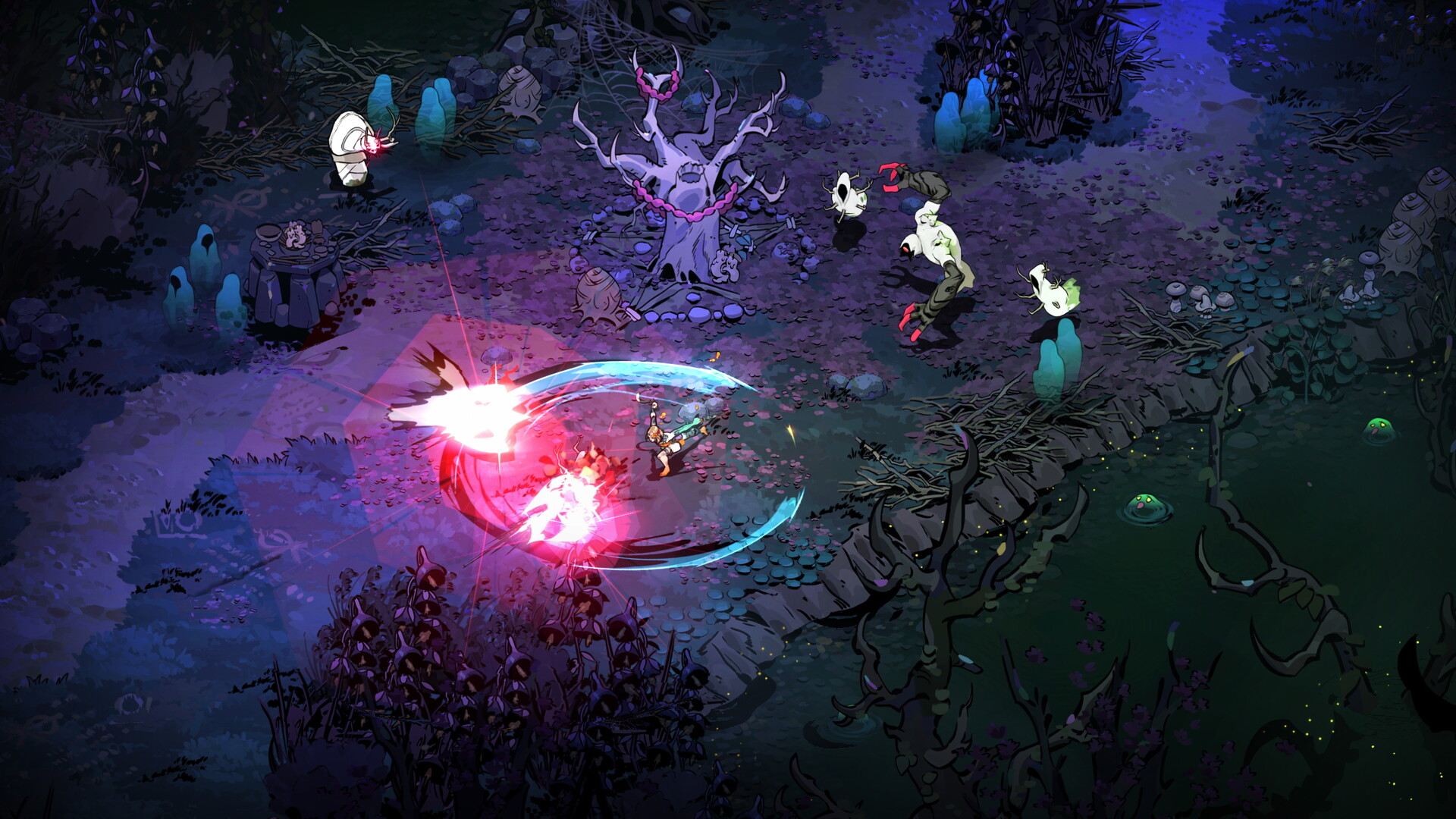
Hades II from Supergiant Games is one of the most prominent Early Access titles on Steam today, and its store page shows how the program is supposed to work: the game is labeled as Early Access and carries the required questionnaire, with ongoing developer updates documented on the page. It is a useful reference for what a committed Early Access project looks like, though it is one example and not a guarantee that every Early Access game is developed the same way.
What can go wrong
The risks of Early Access are the mirror image of its promises. A game can stall, and its developer can walk away, leaving the project permanently unfinished. Valve’s FAQ is explicit that “some teams will be unable to ‘finish’ their game,” which is why the guidance to buy only what you would play today is not a rhetorical flourish. Development can also change direction, so a game bought for one feature set may become something different by full release. None of these outcomes entitles you to a refund beyond the standard two-hour window, which is why the playtime rule deserves more weight here than it does for a finished game.
How to decide whether to buy
The decision framework Valve itself recommends is short and specific. Before buying an Early Access game, read the store page and answer three questions.
Is the game fun to play right now? Look at current screenshots and videos, not the developer’s target render. Valve’s FAQ is blunt: if you are not excited to play the game in its current state, wait.
Is the game actually being updated? The store page surfaces the developer’s recent announcements. A game with a history of regular, substantial updates is a different risk than one whose last update is months old.
Can you live with the game never being finished? The FAQ states that some teams will be unable to finish their game, and that you should only buy if you would be content with the build as it stands. This is the honesty check most storefronts skip.
None of this means Early Access games are bad purchases. Some of Steam’s most successful games spent years in Early Access, and the model exists precisely so a game can improve with real player feedback. The value you are buying, though, is the build you can download today, not the roadmap.
Pricing is not a signal
It is tempting to read a low Early Access price as a discount and a high one as a premium, but neither reading is reliable. Valve’s documentation explains that some developers price Early Access lower to attract a broad early audience, while others price it higher to attract a smaller group of committed players who will give detailed feedback. The price says little about the game’s quality or completeness.
What the price does signal is what the developer is trying to buy with it. That is useful context about the developer’s intentions, but it is not a promise about the final product or its eventual price.
Early Access is a Steam-specific framing
The term “early access” now appears across the industry, but the rules in this article are specific to Steam. Other storefronts and platforms use the label to mean different things, and many “early access” periods elsewhere are really pre-order bonuses or closed betas. When a game is described as “early access,” check what the seller means: a playable unfinished product sold as a purchase, or a timed head start on a finished release. The difference determines whether you are buying a game or a head start.